Baby Nature Bathing

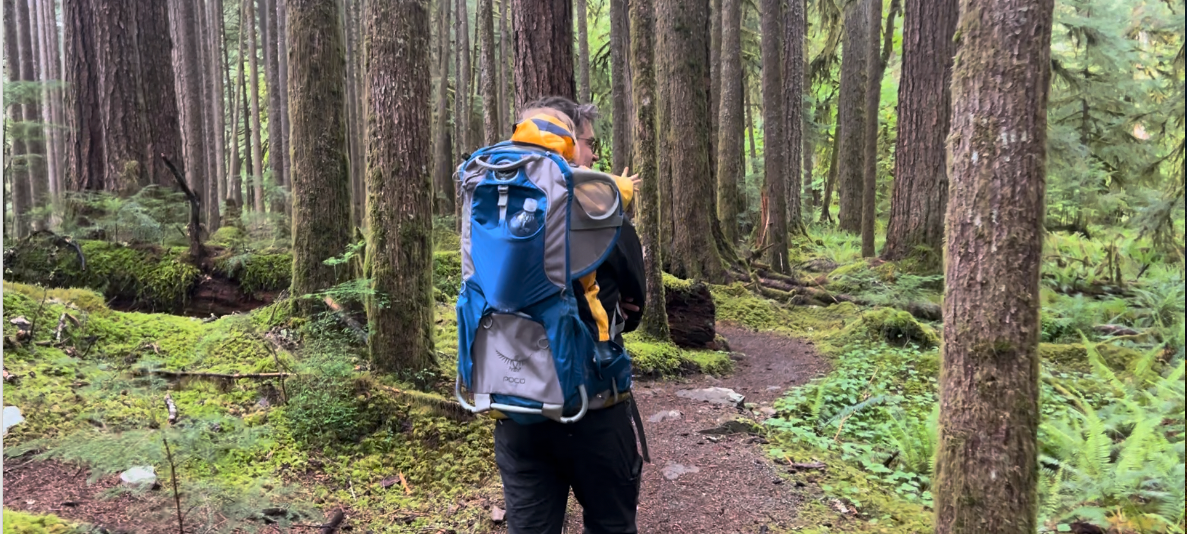
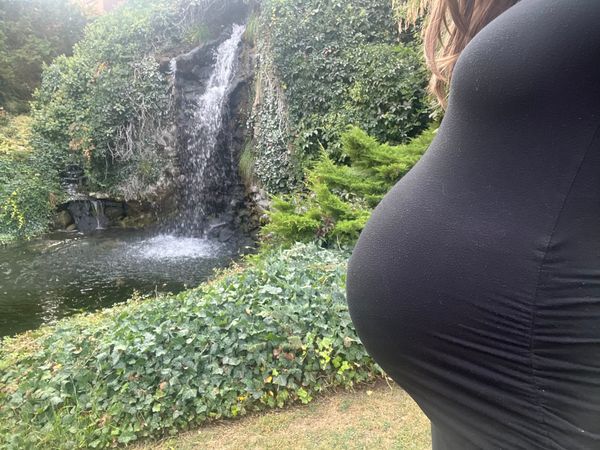
As a new parent I did not anticipate having strong feelings about introducing my daughter to nature. Sure, we're an "outdoorsy-ish" couple and people generally associate kids being outdoors with wholesomeness, but the degree of urgency I felt around getting my baby outside after she was born was far beyond what I expected.
Perhaps this imperative makes sense considering the hyper-medicalized environment in which she came into this world [watch for hyperlink to forthcoming birth story - the good, the bad and the bloody]. The incessant beeping and blinking of medical equipment in the hospital were two of the three top things that I did not enjoy about institutionalized childbirth. Which is to say thanks to modern medicine, social support and my own preparation and general health: I had it pretty good.
While wheelchair-bound and camping out in the NICU for 6-9 hours a day for weeks, we were missing a particularly gorgeous fall season. I remember fiercely eyeing the vivid golds and oranges of the trees and landscaping plants as I hobbled from our car into the hospital and back each day. For the last leg of our stay we moved into a NICU station with an expansive view of Spokane's East Central and Rockwood Neighborhoods. Being trapped behind a glass window on the helicopter diesel-infused top floor of the hospital tower was the sensory equivalent of trying to listen to a concert while getting your teeth drilled at the dentist's office.
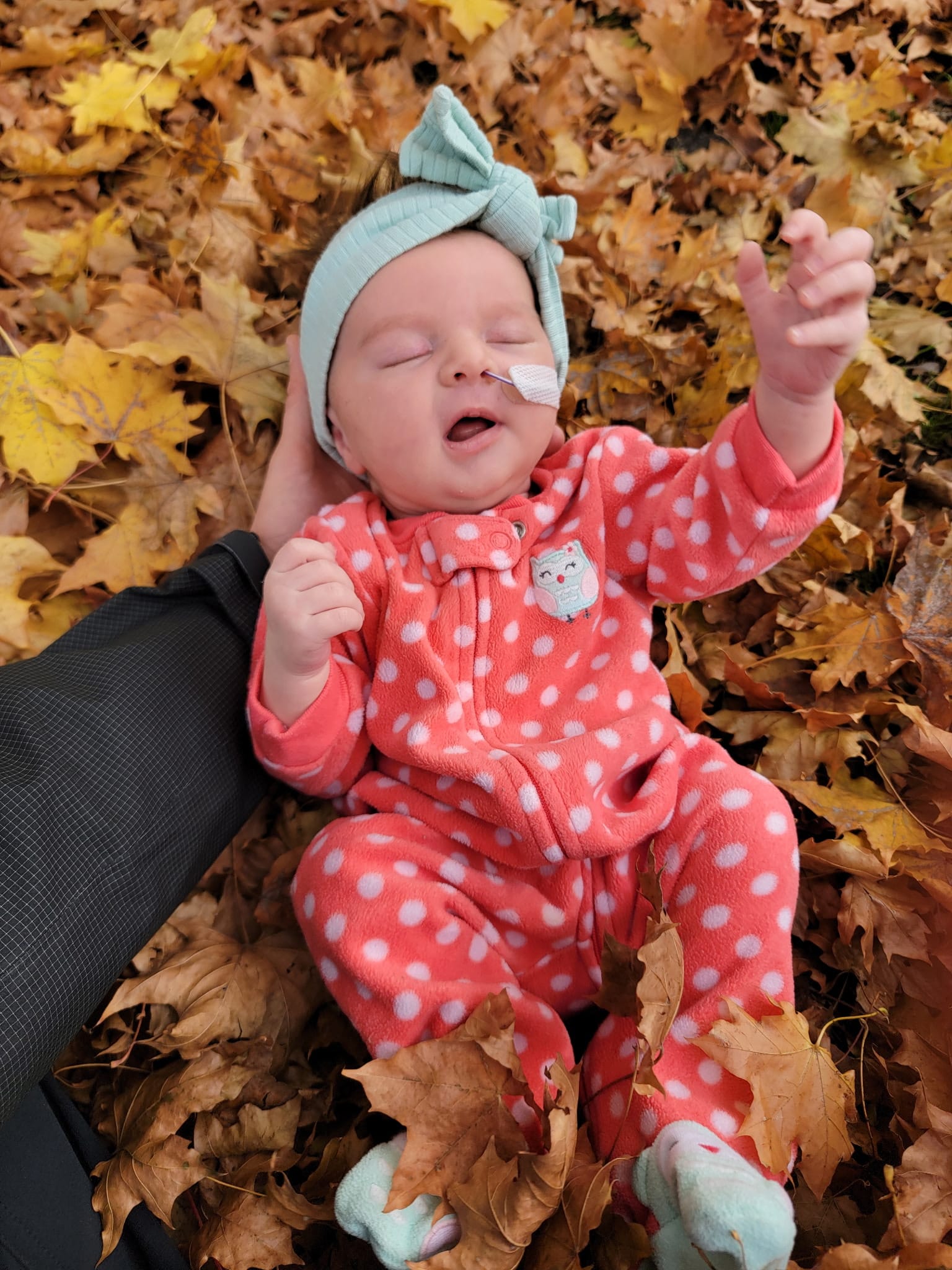
Yet this loathing for the artificiality of my birth surroundings still doesn't fully account for the seriousness of the need to get Adira outside. It was much more than compensating for the loss of a home birth (which would not have been medically prudent for me) by "getting back to nature." Rather, it was as if our daughter was a space being that had recently emerged into a body on Earth, and as locals to dwelling on Earth it was our honor and sacred duty to orient her to its glory. The day Adira was released from the NICU, I bundled her up and her father rushed her down to the Spokane River. A river whose banks we had stood on just weeks before she was born to release leaves of intention into the current as we attempted to mark the significance of the transition we were about to undergo.
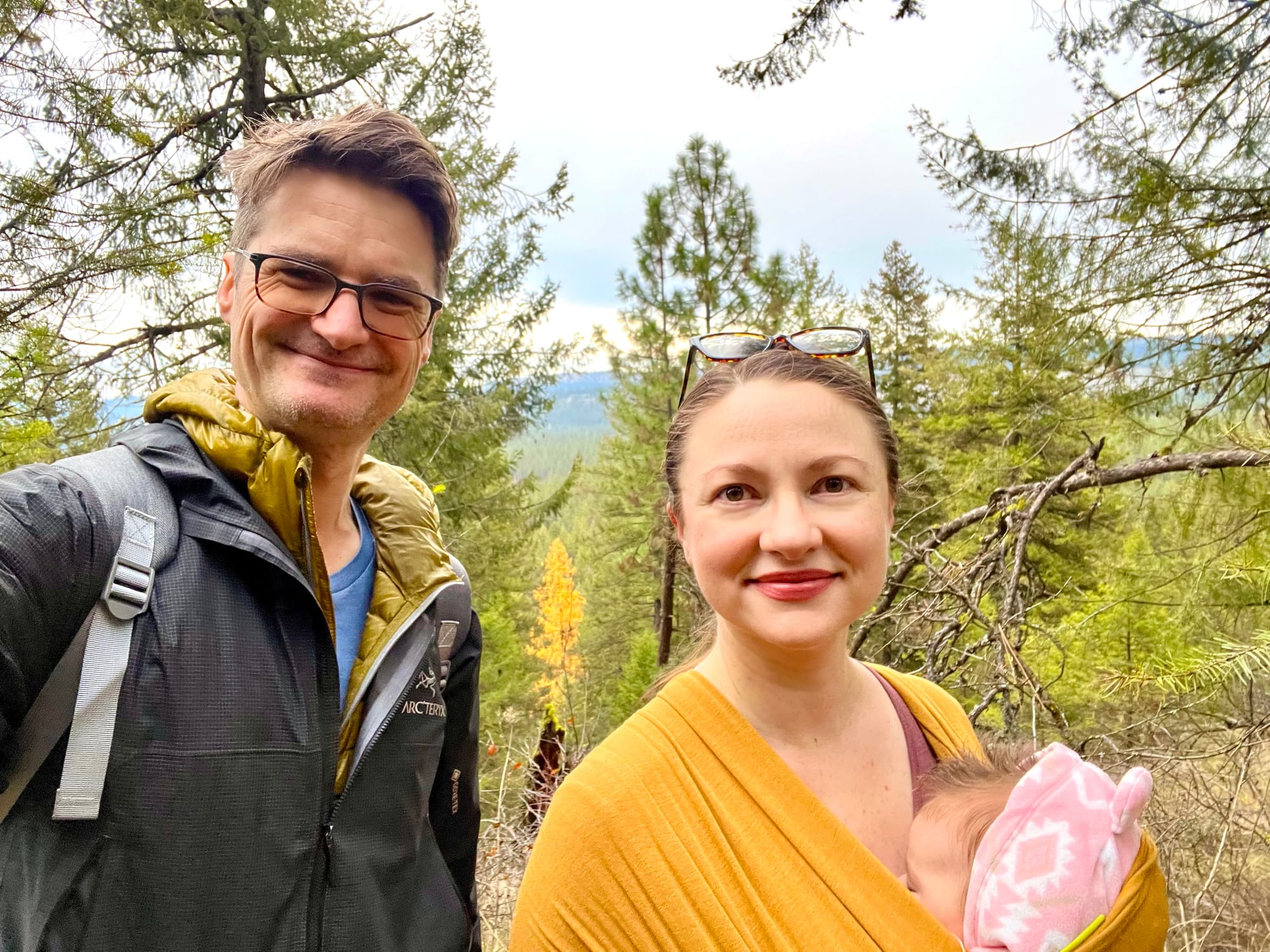
After I was walking again, we did what it took to go hiking in Riverside State Park. We were out for hours with our newborn and her feeding tube in search of a Tamarack grove that we couldn't find save for this one tree. I wondered if we were insane, but it felt like a right and necessary thing to do. We were in a bit of a daze around the enormity of our new reality as parents to this remarkably delicate and yet resilient little creature. We nearly had the entire park to ourselves and it was reassuring to remember that if Native people could raise infants on this mysterious and omnipresent land, surely we mutants with all our modern comforts could do so too. During this excursion Daddy resolved to introduce her to the Old Growth and present her to the Ocean later that spring.
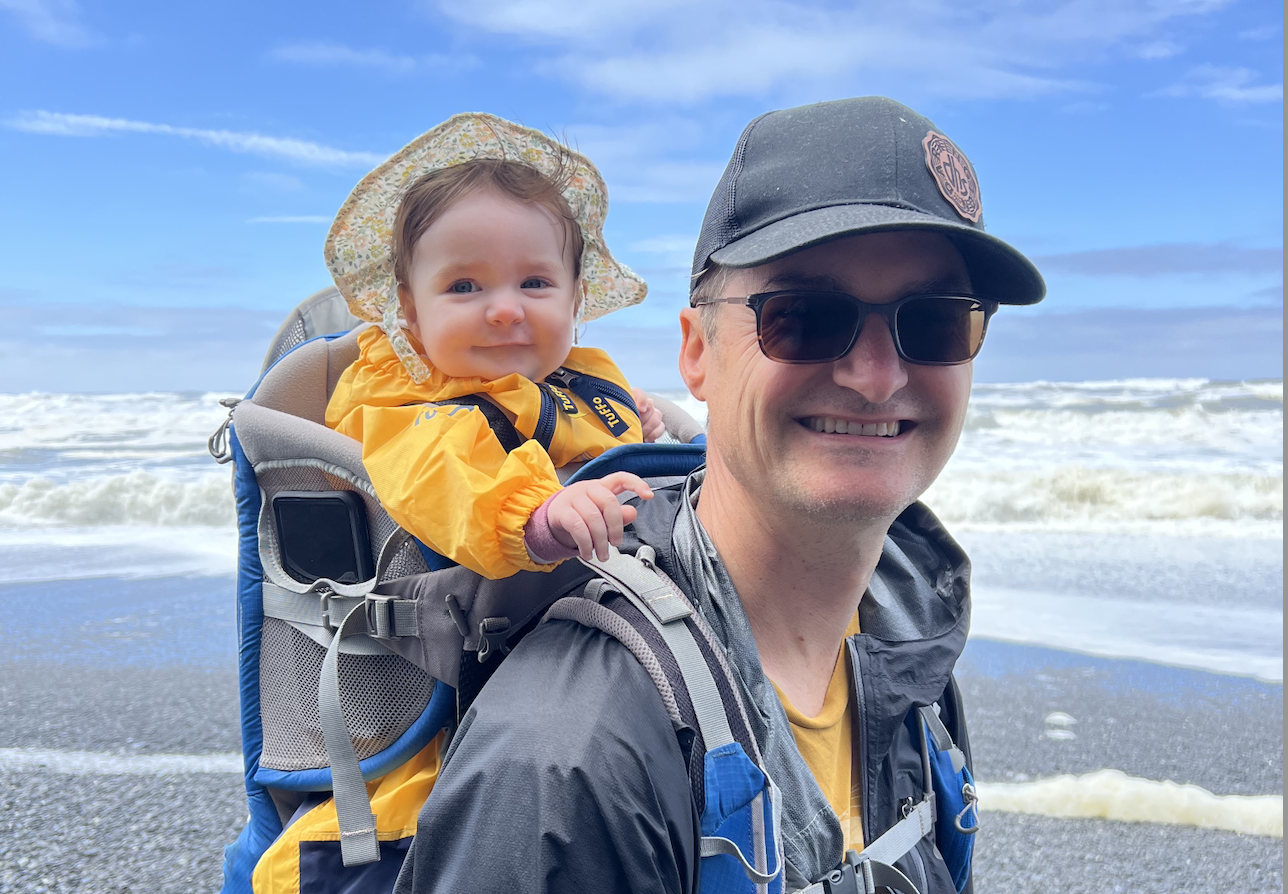
I still can't fully explain why getting Adira into the temple of the great outdoors felt so existentially important. It simply did. We need to know where we come from, and this earth is our ancient home. The cynical side of me remarks that our baby will have no memory of these wonderful places at this age, but the quieter, wiser parts of me support Daddy's drive to pilgrimage her across the state to these wild destinations.
Once there, Adira is delighted with her newfound surroundings. She hums and squeals with satisfaction as her father bounces along the trails and bends over for her to touch and feel natural objects with all different kinds of textures and scents. When I watch my daughter feel her reality with these little birthrights as a tiny human on this planet, she seems to do so with a gentle knowing, almost as if she is quietly acknowledging old friends.
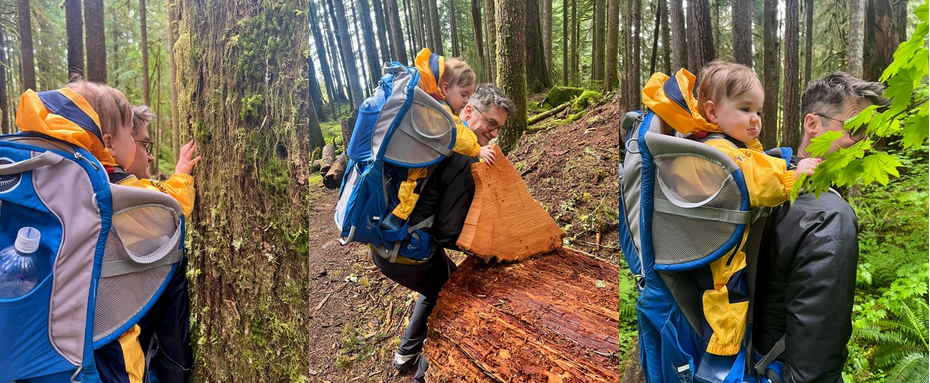
Part of me feels twisted knowing I am encouraging her to love a nature that she will one day realize is in peril due to her own species' impact upon it. I don't know how I will support her through these experiences of grief as I didn't get much support with them when I went through it myself as a child watching the destruction of "my forest" on the cliffs of North Five Mile in the 4th grade.
I just know this is not a reason to divorce her from the capacity to love in the first place. It strikes me that Adira may be only the third generation in our family to grow up and wonder if the general integrity of the natural world she will come to know and love will remain intact in her lifetime. Like generations of immigrants who count themselves by lives separated from the mother country, we are now all immigrants hurtling towards an unknown ecological future, increasingly taxed by the consequences of how we have chosen to collectively live on this planet.
One day I was setting out for a walk in the neighborhood when it began to gently mist rain. A well-meaning neighbor looked at me with great concern saying, "Oh no, she might get wet!" "That is actually the point," I replied. "She likes the feeling of the droplets on her face." We walked around and came back no worse for the wear.
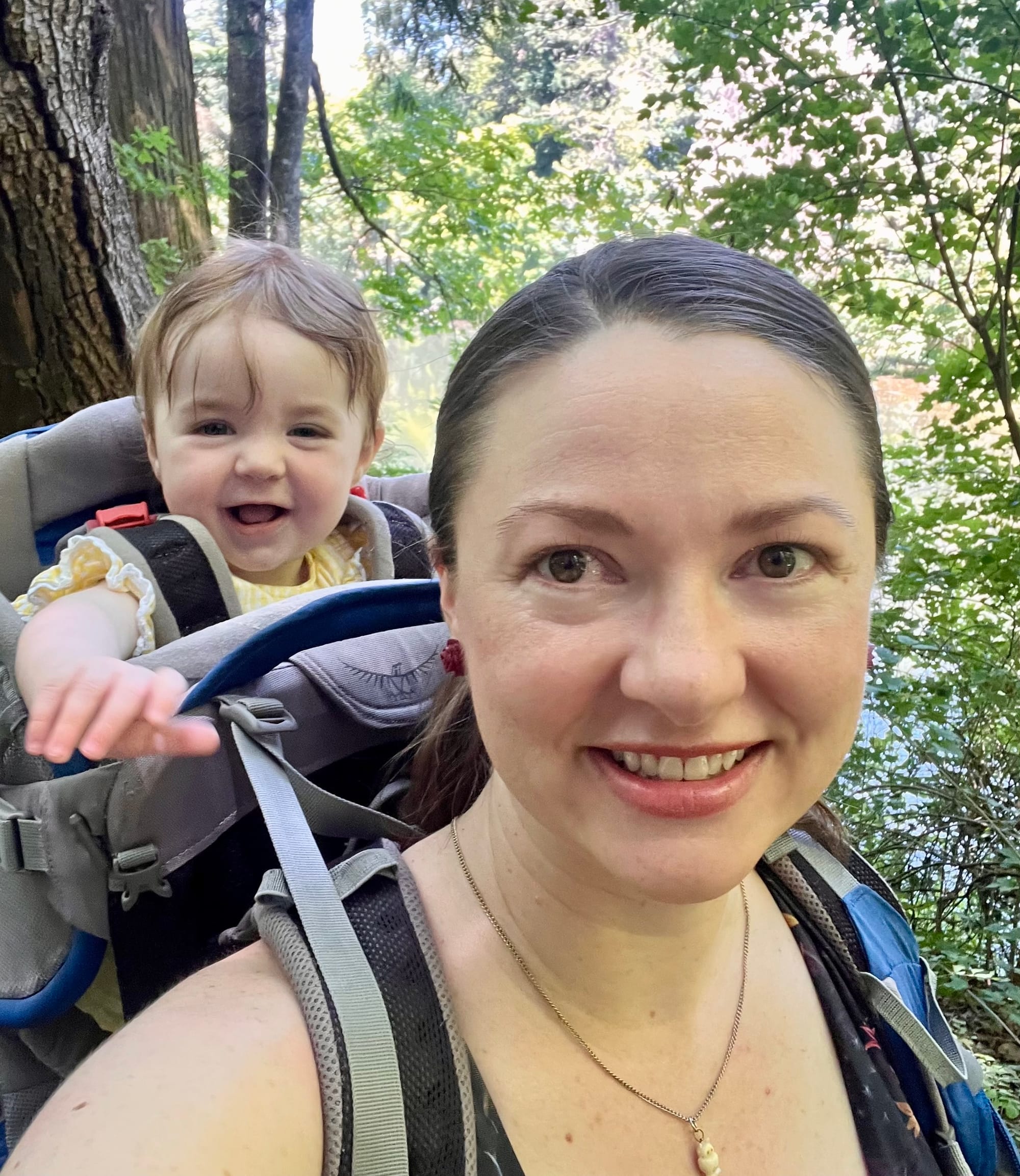
I hope nature for my daughter is not a destination or something experienced on rare special occasions. I want nature to be something she knows she lives within, not merely something she visits. How beautiful would it be if "Forest Bathing" was such a way of life that the term ceased to have any meaning? What would our world look like if we truly lived in an integrated way with other forms of life and it no longer made sense to consciously enter and exit "nature" as a dedicated activity? In a time when our western materialistic lifestyle makes encounters with biodiverse environments more and more rare, perhaps that is all the more reason to spend time outside from the very beginning. Be present in it whenever you can.
Maybe this is what "introducing an infant to nature" is really about. It is remembering that we are not alien visitors here, rather we are participants in a living world that preceded us and will continue to evolve beyond us. It is about creating the space for a child to form her own direct relationship with life before the realization of its demise that will follow. In this way I hope Adira will become grounded in a felt sense of belonging before she confronts the realities of what has already been or will be lost. May she find a way to come home to a more beautiful future with her lifetime of peers; human and otherwise.